
The Leader You Need May Not Look the Way You Expect
A family movie night turned into an unexpected leadership lesson. Through Happy Feet, this reflection explores how difference, resistance to change, and belonging shape effective leadership, and why the leaders who make the biggest impact often do not fit the mold.
1/1/20262 min read
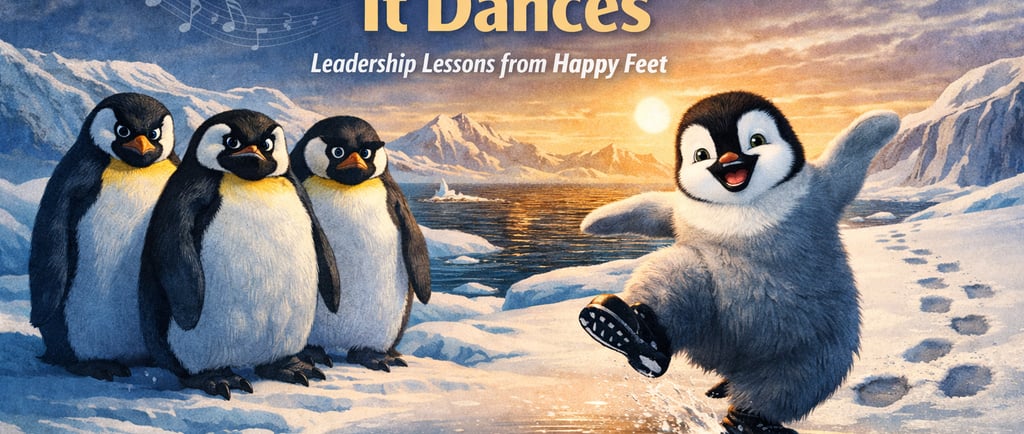
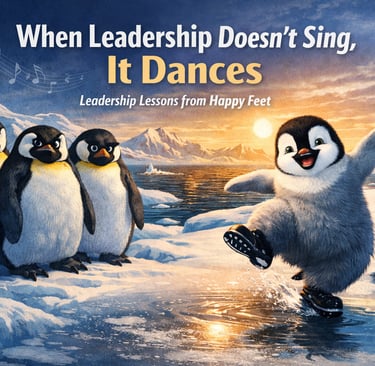
As I was watching Happy Feet with my grandchildren during this break, I realized I was seeing the movie in a completely different way than I ever had before. What was supposed to be a simple moment of rest and family time slowly turned into a leadership reflection. I was not just watching an animated film. I was watching culture, expectations, resistance to change, and leadership play out on the screen.
Leadership does not always look the way people expect it to. Sometimes it does not sound the same. Sometimes it does not move the same. Sometimes it tap dances.
Mumble is born into a world where everyone sings. Singing is not a preference. It is the standard. It is how worth is measured. It is how identity is formed. From the very beginning, Mumble’s difference is treated as a problem to be fixed instead of a strength to be developed. That moment felt familiar, because many organizations operate the same way. Leaders say they value creativity and innovation, but what they often reward is compliance and sameness.
When someone shows up differently, the first reaction is rarely curiosity. It is discomfort. That discomfort gets mislabeled as poor attitude, lack of fit, or resistance. Mumble experiences this firsthand. He is not trying to disrupt the colony. He is simply being who he is. Too often, leaders confuse difference with defiance.
What stood out to me this time was that Mumble never abandons who he is to gain approval. He never learns to sing just to fit in. Instead, he stays focused on the mission. Survival. Stewardship. The well being of the colony. When the environment changes and the old methods stop working, his difference becomes the solution.
That is a critical leadership lesson. Results have a way of reframing narratives. You do not change minds by arguing your value. You change minds by solving real problems. Mumble does not win the elders over with explanations. He earns credibility through action. Leadership influence grows when clarity, courage, and results align.
Another lesson became impossible to ignore. The elders were not bad leaders. They were rigid leaders. They confused tradition with truth. They stopped listening, especially to voices that challenged the status quo. When leaders stop listening, they stop learning. When they stop learning, they become blind to emerging threats until it is almost too late.
Effective leaders stay open. They ask uncomfortable questions. They examine assumptions. They create space for perspectives that do not sound like their own. Not because it feels good, but because it is necessary for survival and growth.
The final lesson that stayed with me was about belonging. Once Mumble is accepted, the entire colony becomes stronger. Inclusion is not about lowering standards or avoiding accountability. It is about unlocking capacity. People perform better when they are valued for who they are and how they contribute to the mission.
Leadership is not about fitting a mold. It is about aligning people to purpose. Sometimes the leader an organization needs most is the one who does not sing the right song. Sometimes it is the one dancing to a rhythm no one else hears yet.
Watching Happy Feet this time reminded me that leadership is not about protecting tradition. It is about protecting the mission. And the leaders who make the biggest difference are often the ones who were once told they did not belong.
Reflection Challenge
Where might I be mistaking difference for defiance, and what strengths or solutions could I be overlooking because they do not fit my preferred style or existing systems?